Best 360 Cameras (2026) — The Smartest Picks for Action, Travel, Virtual Tours, and Creator Work
360 cameras have become much more interesting than they used to be.
A few years ago, this category felt niche. Today, it is much more practical. You can buy a 360 camera for action footage, travel content, reframed social clips, bike and motorcycle footage, real-estate tours, immersive stills, or simply for the freedom of capturing everything first and choosing the angle later.
That last part is why 360 cameras keep winning people over.
A normal action camera forces you to point the lens correctly in the moment. A 360 camera lets you capture the whole scene and decide later what the final shot should look like. For solo creators, travelers, riders, skiers, vloggers, and anyone who does not want to keep missing angles, that changes everything.
But this category is also easy to buy badly.
Some models are clearly built for action creators. Some are much stronger for photo-first or virtual-tour work. Some are great because the software is excellent. Some look strong on paper but make editing or daily use more frustrating than expected.
That is why this guide is not just a list of the newest models.
It is a shortlist of the 360 cameras that actually make sense right now based on real-world priorities:
- image quality that still holds up after reframing
- stitching, stabilization, and ease of use
- portability and durability
- software experience, which matters a lot in 360
- whether the camera is best for action, creator use, or still-image work
And yes — software matters here more than in many other camera categories. A 360 camera can shoot amazing footage, but if the app, reframing tools, export flow, or desktop experience are weak, the whole ownership experience suffers.
Quick Picks
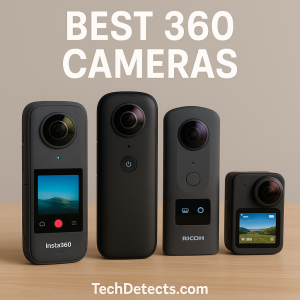
- Best overall 360 camera: Insta360 X5
- Best alternative to Insta360 for action creators: DJI Osmo 360
- Best GoPro-style 360 action camera: GoPro MAX2
- Best for premium stills and virtual-tour style work: Ricoh Theta Z1
- Best for high-resolution 360 photos with better usability: Ricoh Theta X
- Best enthusiast alternative with strong image specs: Kandao QooCam 3 Ultra
- Best value older-gen option if found at the right price: Insta360 X4
What actually matters when buying a 360 camera
Video resolution is not the whole story
With 360 cameras, the raw resolution number can be misleading.
Why?
Because 8K 360 video sounds massive — and it is — but once you reframe that footage into a standard flat video, you are only using part of the full sphere. That means image quality after reframing matters more than the headline number alone.
This is why the better cameras separate themselves through:
- sensor quality
- stitching quality
- dynamic range
- low-light handling
- software-assisted reframing and stabilization
In other words: a great 8K 360 camera is not just “8K.” It is the one whose footage still looks good after you turn it into the clip you actually want.
Action use and photo use are not the same thing
Some 360 cameras are designed to be thrown onto a helmet, bike, ski pole, or selfie stick and taken everywhere.
Others make more sense for:
- real-estate style work
- interior capture
- tourism and location documentation
- photo-first use
- controlled professional shooting
This is why a Ricoh Theta model and an Insta360 X-series camera can both be excellent while serving very different buyers.
Software is one of the biggest deciding factors
A 360 camera is not just hardware.
It is also:
- the mobile app
- reframing tools
- desktop export workflow
- subject tracking
- editing speed
- cloud or sharing convenience
This is exactly why brands like Insta360 have remained so strong. The camera may get you into the ecosystem, but the software is what decides whether you enjoy using it.
Durability matters more than many first-time buyers expect
360 camera lenses are exposed in a way normal action cameras are not.
That means lens protection, replaceability, ruggedness, and waterproofing matter a lot. A 360 camera that is brilliant on paper but stressful to use outdoors becomes much less appealing in real life.
Best 360 Cameras (2026)
Insta360 X5 — Best Overall 360 Camera
Why it’s here: Right now, this is the strongest all-round 360 camera for most people. It combines flagship-level video, strong software, better ruggedness, and the kind of usability that makes 360 shooting feel practical instead of experimental.
Who it’s for: The widest range of buyers — action creators, travelers, motorcyclists, skiers, vloggers, and anyone who wants the best all-round 360 camera without overcomplicating the decision.
What it nails
- excellent overall image quality with flagship-grade 8K 360 capture
- stronger low-light promise than older action-focused 360 cameras
- replaceable lens design is a huge real-world advantage
- waterproof, durable, and clearly built for active use
- class-leading app and editing ecosystem
Real-world experience
This is the camera that currently makes 360 feel mature.
It is not just about resolution. It is about confidence. You can take it outdoors, mount it, shoot aggressively, reframe later, and actually enjoy the process. That matters. A lot of 360 cameras become annoying in ownership. The X5 feels like a system designed to be used often.
And that is why it gets the top spot.
Trade-offs: Premium pricing, and like every 360 camera, you still need to respect those lenses.
DJI Osmo 360 — Best Alternative to Insta360 for Action Creators
Why it’s here: DJI did not enter this category timidly. The Osmo 360 immediately made itself relevant by targeting strong image quality, low-light performance, and an action-friendly workflow.
Who it’s for: Buyers who want a serious modern 360 action camera and prefer DJI’s ecosystem or design philosophy.
What it nails
- strong 8K 360 positioning with emphasis on low-light quality
- impressive still-photo headline numbers for a modern action-style 360 camera
- good fit for users already comfortable with DJI accessories and workflow
- strong “one device for both 360 and action-style use” appeal
Real-world experience
This feels like the first genuinely serious DJI answer in the consumer 360 action space. It is not just a box-ticking release. It looks designed to compete directly with the best action-first 360 cameras and to appeal to creators who want a polished modern alternative.
That makes it one of the most important models in the category right now.
Trade-offs: Availability and ecosystem comfort may vary by region, and some buyers will still prefer Insta360’s more deeply mature 360 editing culture.
GoPro MAX2 — Best GoPro-Style 360 Camera
Why it’s here: GoPro needed to come back strongly in 360, and MAX2 is the camera that puts the brand back into the conversation in a serious way.
Who it’s for: Existing GoPro users, action shooters, and buyers who want a familiar GoPro-style hardware and app experience in a modern 360 camera.
What it nails
- true 8K 360 capture gives it real spec credibility in the current market
- strong action-camera brand familiarity for GoPro users
- replaceable-lens idea is important in this category
- good fit for users already invested in GoPro accessories or workflow
Real-world experience
MAX2 matters less because it is “another 360 camera” and more because it gives GoPro fans a real current-generation option again. If you already trust the brand and like how GoPro hardware feels, this is the easiest way to stay in that world without buying an older, clearly aging model.
It is also simply good to see serious competition in this category again.
Trade-offs: GoPro still has to win buyers back in 360 after being quieter in the category for a while, and software preference will still split users between GoPro and Insta360.
Ricoh Theta Z1 — Best for Premium Stills and Virtual-Tour Work
Why it’s here: This is still one of the most respected names in photo-first 360 shooting, especially for people who care more about image quality, RAW workflow, and professional stills than helmet-cam action footage.
Who it’s for: Real-estate professionals, interior shooters, tourism creators, and photo-first users who care deeply about image quality and post-processing flexibility.
What it nails
- dual 1-inch sensor design remains a serious differentiator
- RAW capture makes it much more flexible for careful post work
- strong fit for professional and controlled shooting environments
- still one of the more credible premium 360 photography tools
Real-world experience
The Theta Z1 is not trying to be your mountain-bike action camera. That is the wrong way to judge it.
This camera makes more sense when you care about premium still quality, professional use, and image integrity rather than hyper-rugged everyday adventure use. In that role, it still earns respect.
Trade-offs: Video specs look dated compared with the newest action-first 360 cameras, and it is not the best match for hard outdoor creator use.
Ricoh Theta X — Best for High-Resolution 360 Photos with Better Everyday Usability
Why it’s here: The Theta X is one of the better choices for people who want high-resolution 360 stills, a simpler on-camera experience, and a more approachable workflow than older Ricoh models.
Who it’s for: Property shooters, documentation users, and buyers who want photo-first 360 capture with practical usability improvements.
What it nails
- very high-resolution 360 photo capture is a real strength
- large built-in touchscreen makes the camera easier to use on its own
- better field usability than many people expect from a 360 stills camera
- expandable storage and swappable battery design are practical advantages
Real-world experience
This is one of the most logical cameras for buyers whose use case is not “YouTube action creator” but “I need clear, practical, high-res 360 imagery.” In that role, the Theta X makes a lot of sense and feels more approachable than older specialist-style 360 devices.
Trade-offs: Video is not the headline strength here, and buyers looking for action-first creator energy should look elsewhere.
Kandao QooCam 3 Ultra — Best Enthusiast Alternative with Strong Image Specs
Why it’s here: Kandao continues to appeal to enthusiasts who want strong imaging credentials and do not mind buying something a little less mainstream.
Who it’s for: Enthusiasts and creators who want high-resolution 360 video and photo specs outside the usual Insta360 / GoPro / DJI shortlist.
What it nails
- strong headline imaging specs, including 8K 360 video and very high-res photos
- appealing sensor and aperture story for image-conscious buyers
- more serious enthusiast flavor than toy-like gadget energy
- good option for buyers who want something different from the biggest brands
Real-world experience
This is the camera people start looking at when they have already outgrown basic buying guides and want to explore serious alternatives. On paper, it is compelling, and for the right user it can be a very rewarding pick.
But this is also the kind of purchase where ecosystem confidence matters. Some buyers will love going slightly off the mainstream path. Others will prefer the safety of more established software ecosystems.
Trade-offs: Less mainstream support and community momentum than the biggest brands.
Insta360 X4 — Best Value Older-Generation Option
Why it’s here: Not everyone needs the newest flagship. If the X4 is available at the right discount, it remains one of the smartest value buys in the 360 space.
Who it’s for: Buyers who want a modern, capable, widely supported 360 camera without paying full flagship money.
What it nails
- still a very capable 8K-class 360 camera for many users
- strong Insta360 software ecosystem remains a major advantage
- easier value recommendation when discounted below the newest model
- good balance of action use, travel use, and creator flexibility
Real-world experience
This is the classic “buy last generation intelligently” recommendation. If the price gap is meaningful, the X4 still makes a lot of sense for many people. It is good enough that most first-time 360 buyers will not feel shortchanged.
It simply gets squeezed by the X5 above it.
Trade-offs: Once prices get too close, the newer model becomes the smarter long-term buy.
Recommended Reading: Best Laptops for Creators – Top Picks for Editing
How to choose the right 360 camera for your use
Choose Insta360 X5 if you want the safest overall recommendation
This is the easiest pick for most buyers because it does almost everything well enough to avoid regret.
Choose DJI Osmo 360 if you want a serious modern challenger
This is the one to watch if you want strong action-style 360 performance and like DJI’s approach to hardware.
Choose GoPro MAX2 if you prefer GoPro’s ecosystem and design language
It is the right pick for people who simply want a modern GoPro 360 camera and do not want to jump brands.
Choose Ricoh Theta Z1 if your priority is premium still-image quality
This is where photo-first buyers and pro-use shooters should focus.
Choose Ricoh Theta X if you want practical high-res stills and easier standalone use
Its touchscreen and usability improvements matter more than they may seem on paper.
Choose QooCam 3 Ultra if you want an enthusiast alternative with strong imaging ambition
This is the “I want something more specialized and I know why” option.
Buying mistakes to avoid
Do not buy a 360 camera based on resolution alone
The best camera is the one whose reframed footage, software, and real-world handling are actually good.
Do not ignore software
A great app can make you use your camera more. A frustrating app can make you stop using it.
Do not underestimate lens vulnerability
360 camera lenses are exposed by design. Durability, lens guards, and repair options matter.
Do not buy a photo-first 360 camera for action use unless you know exactly what you are sacrificing
This is one of the easiest ways to end up with the wrong camera.
Final Buying Advice
If you want the best 360 camera right now for the widest range of people, the Insta360 X5 is the strongest overall pick.
If you want a major modern alternative, the DJI Osmo 360 is the most interesting challenger in the category.
If you want a GoPro-flavored action-first option, the GoPro MAX2 is the obvious answer.
If your work is more about premium stills, real estate, interiors, or virtual tours, the Ricoh Theta Z1 and Ricoh Theta X make much more sense than many action-first cameras.
And if you want a more enthusiast-oriented alternative, the Kandao QooCam 3 Ultra is one of the most interesting non-mainstream choices available.
The key is simple: buy the 360 camera that matches how you shoot — not just the one with the biggest marketing headline.