Best VR Headsets to Buy in 2026 — Clear Optics, Smooth Tracking, Real‑World Value
VR in 2026 has a clear split:
- Standalone VR/MR (easy, wireless, best for most people)
- Console VR (amazing games, but tied to a platform)
- PCVR (best visuals and mods—if you’re willing to build a setup)
- Spatial computing (incredible screens and UI… at luxury pricing)
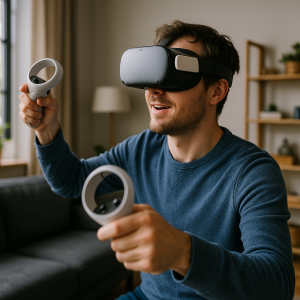
This guide focuses on what actually matters when you put a headset on your face: optics clarity, tracking stability, comfort, and total ecosystem value — written for a global audience.
Quick Picks (TL;DR)
- Best overall VR headset for most people: Meta Quest 3
- Best budget VR headset (still “good enough”): Meta Quest 3S
- Best console VR (tied to PS5): PlayStation VR2
- Best “luxury spatial computing” experience: Apple Vision Pro
- Best ultra‑light PCVR for long sessions: Bigscreen Beyond 2 / 2e
- Best clarity-per-dollar PCVR: Pimax Crystal Light
- Best portable “PCVR + standalone” hybrid: HTC VIVE XR Elite
What actually matters when buying a VR headset
1) Optics: pancake vs Fresnel (this is the big one)
- Pancake lenses usually give clearer edges, better sweet spot, and less “VR blur.”
- Fresnel lenses can look softer with more glare/rings, but they keep cost down.
If you care about text clarity, menus, cockpit sims, or productivity, optics matter more than raw resolution.
2) Tracking style
- Inside-out tracking (cameras on the headset) is easy and the modern default.
- External base stations (SteamVR lighthouse) can be the most precise for PCVR, but require setup.
3) Refresh rate and comfort
Higher refresh helps motion feel smoother — but comfort is also:
- weight distribution
- head strap quality
- facial interface fit
A “lighter” headset with better balance can feel more comfortable than a heavier one with slightly better specs.
4) The ecosystem decides your library
Before you buy, decide your main use:
- standalone games
- PCVR (Steam)
- PS5 exclusives
- media / spatial computing
Your best headset depends more on your platform than on a spec sheet.
Best VR Headsets to Buy (2026)
Meta Quest 3
Why it’s here: Quest 3 is the best “real-world value” headset because it nails the balance: strong optics, great standalone performance, and an ecosystem with the most momentum.
Who it’s for: Most people who want VR gaming, fitness, mixed reality fun, and optional PCVR without building a full PCVR room.
What it solves:
- A strong all-round VR/MR experience with modern performance
- Great passthrough mixed reality compared to older generations
- Easy setup: no base stations, no external sensors
Trade-offs: Not the absolute best for raw PCVR clarity (specialist PC headsets can beat it). Battery life means you’ll often want a battery strap for long sessions.
Meta Quest 3S
Why it’s here: The best entry point into modern VR at a much lower price. Meta positions it as the affordable mixed reality upgrade lane.
Who it’s for: First-time VR buyers, families, casual VR, and anyone who wants great value.
What it solves:
- Modern VR performance at a lower price tier
- Easy standalone setup and good game library access
Trade-offs: It uses lower-end optics than Quest 3 (this usually means less edge clarity and more glare), so Quest 3 is still the better long-term buy if you can afford it.
PlayStation VR2
Why it’s here: PS VR2 is still one of the best ways to get high-end, smooth VR without building a PCVR setup — with excellent displays and console-grade games.
Who it’s for: PS5 owners who want premium VR with strong tracking and Sony’s VR ecosystem.
What it solves:
- OLED display with high refresh options (90/120Hz) and wide FOV class
- Very consistent “plug in and play” console VR experience
- Strong headset + controller tracking built into the system
Trade-offs: You’re tied to PlayStation (and PS VR2 content). If you want PCVR freedom, a Quest or PC headset fits better.
Apple Vision Pro
Why it’s here: If your priority is the best-looking screens and spatial UI experience, Vision Pro is in a category of its own. It’s the closest thing to “cinema screens in your room,” plus a very polished spatial computing interface.
Who it’s for: Early adopters, Apple ecosystem power users, and anyone buying primarily for media, productivity, and spatial computing — not gaming value.
What it solves:
- Extremely high pixel density display system with strong color coverage and multiple refresh modes
- Best-in-class hand/eye/voice interaction model
- Premium media viewing and spatial app experience
Trade-offs: Very expensive, and the gaming library/value proposition is not comparable to Quest/PS VR2.
Best PCVR headsets (for clarity, mods, and long sessions)
Bigscreen Beyond 2 / Beyond 2e
Why it’s here: If you want an ultra-light headset that disappears on your face, Bigscreen’s Beyond 2 is a standout. It’s designed for long PCVR sessions where comfort matters as much as visuals.
Who it’s for: PCVR enthusiasts who already have (or are willing to set up) SteamVR base stations and want a light, premium headset.
What it solves:
- Extremely low headset weight for comfort
- SteamVR ecosystem access (mods, sims, PC library)
- Optional eye tracking on 2e for advanced features
Trade-offs: Requires PC + (typically) SteamVR base stations. It’s not a casual “open the box and go” headset.
Pimax Crystal Light
Why it’s here: If your priority is clarity-per-dollar in PCVR, Crystal Light is one of the most aggressive spec/value plays: very high per-eye resolution and a display setup built around sharpness.
Who it’s for: Sim racers, flight sim users, and PCVR players who want sharp visuals and don’t mind a larger headset.
What it solves:
- Very high per-eye resolution and high refresh modes
- Built for crisp detail in sims and high-resolution content
Trade-offs: PC requirements are higher. It’s heavier than ultra-light headsets and feels more “hardware enthusiast” than mainstream.
Best portable hybrid option
HTC VIVE XR Elite
Why it’s here: A flexible headset that can work as standalone and also connect for PCVR-style use cases — with a focus on portability.
Who it’s for: People who want a lighter, travel-friendly VR setup and mixed reality features in a compact form.
What it solves:
- Standalone VR with inside-out tracking
- Compact design compared with many full-size headsets
Trade-offs: The standalone ecosystem and value proposition isn’t as strong as Meta’s for most buyers.
Heads-up: Valve Index availability
Valve’s Index(Buy on Amazon) is iconic for tracking and controllers, but it’s an older generation PCVR headset and availability can change (it has been reported as discontinued). If you’re shopping in 2026, consider newer PCVR options unless you specifically want the Lighthouse ecosystem for a certain setup.
Which VR headset should you buy?
- Best overall for most people: Meta Quest 3
- Best budget / first VR headset: Meta Quest 3S
- Best for PS5 owners: PlayStation VR2
- Best for media/spatial computing (luxury): Apple Vision Pro
- Best PCVR comfort: Bigscreen Beyond 2 / 2e
- Best PCVR clarity-per-dollar: Pimax Crystal Light
- Best portable hybrid: HTC VIVE XR Elite
“Real-world value” buying advice
If you’re new to VR
Buy Quest 3 if you can. If you need to keep cost down, Quest 3S is the safe entry point.
If you want the best VR games without a PC
If you already have a PS5 and want premium VR, PS VR2 is the cleanest route.
If you want the sharpest VR for sims
PCVR headsets like Pimax Crystal Light can deliver excellent clarity — but you need a strong GPU and tolerance for more setup.
If comfort is your #1 problem
Ultra-light PCVR options like Bigscreen Beyond 2 are the “I can wear this forever” lane.
Comparison Table
| Headset | Platform | Best for | Key strength | Main trade-off |
|---|---|---|---|---|
| Meta Quest 3 | Standalone + PCVR | Best overall | Great optics + strong library | Battery/strap upgrades |
| Meta Quest 3S | Standalone + PCVR | Budget VR | Low price for modern VR | Lower-end optics |
| PlayStation VR2 | PS5 (and some PC) | Console VR | OLED + smooth refresh | Platform lock-in |
| Apple Vision Pro | Apple | Media/spatial | Premium display + UI | Price, gaming value |
| Bigscreen Beyond 2/2e | PCVR | Comfort PCVR | Ultra-light design | Needs PC + base stations |
| Pimax Crystal Light | PCVR | Clarity/sims | Very high resolution | Heavy-ish, high PC needs |
| HTC VIVE XR Elite | Standalone + PCVR | Portable hybrid | Compact, flexible | Smaller ecosystem |
Conclusion
The best VR headset in 2026 depends on how you want to use it — but the most honest answer for most people is still:
Meta Quest 3.
It delivers the best mix of optics, tracking, and library value, with the least setup friction.
If you’re budget-focused, Quest 3S is the entry point. If you want console-grade VR and already own a PS5, PlayStation VR2 is the cleanest premium gaming experience.
For PCVR specialists, choose based on your priority: comfort (Bigscreen Beyond 2) or sharpness (Pimax Crystal Light). And if you want luxury spatial computing rather than gaming value, Apple Vision Pro is the premium lane.
Highly recommended before you make a decision: The Future of VR: What to Expect.