Best Graphics Cards Under $100 (2026) — The Few That Still Make Sense
The truth about graphics cards under $100 is simple:
This is no longer a normal gaming-GPU category.
That does not mean it is useless. It just means you have to buy with the right expectations.
At this budget, you are usually shopping for one of four things:
- a basic gaming upgrade for an older desktop
- a low-profile card for a small-form-factor PC
- a media, streaming, or multi-monitor upgrade
- the absolute cheapest discrete GPU that is still worth powering on
And that last part matters.
Because below $100, the market gets filled with cards that look appealing in listings but make very little sense in real use. Some are too slow to justify buying in 2026. Some are saddled with weak memory configs. Some are only interesting if you need display outputs, not actual gaming. And some are only worth considering if you catch the right sale at the right time.
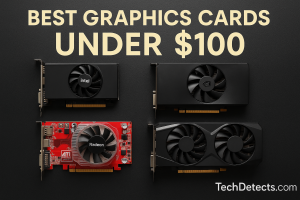
So this guide is not padded with junk.
It is built around the few graphics cards under $100 that still make practical sense, depending on what kind of PC you are upgrading and what you actually want to do with it.
Quick Picks
- Best overall if you can catch it near $100: Intel Arc A380
- Best for low-profile 1080p upgrades: Radeon RX 6400
- Best ultra-budget new option: Intel Arc A310
- Best simple display/legacy PC upgrade: GeForce GT 1030 GDDR5
- Best for basic multi-monitor or ultra-light gaming: Radeon RX 550 4GB
The reality of buying a GPU under $100 in 2026
This budget is mostly about compromise
If you are expecting smooth AAA gaming at modern settings, this is the wrong category.
If you are expecting:
- esports at reduced settings
- light 1080p gaming
- a much-needed upgrade over weak integrated graphics
- better media support and more display outputs
- a low-power card for an OEM or small-form-factor PC
then this category can still make sense.
That is the right mindset.
New cards under $100 are rare — and that changes how you should shop
This budget used to be much easier.
Now, genuinely worthwhile sub-$100 GPUs are limited. Some of the best options only make sense when they dip to $99 on sale, clearance, or a retailer special. That is why smart buying matters more here than in almost any other GPU tier.
Low-profile and no-power-connector cards matter a lot here
Many people shopping under $100 are not building new gaming towers.
They are upgrading:
- office desktops
- small prebuilt PCs
- slim cases
- older home systems
That is why cards like the RX 6400, Arc A310, Arc A380, and GT 1030 stay relevant. They are often more about fit, power draw, and practicality than brute force.
Do not judge these cards by headline VRAM alone
At this level, a 4GB card is not automatically better than a 2GB card if the GPU itself is weak. And a 6GB card is not magical if the software support or game compatibility is not right for your system.
This is why the type of buyer matters so much.
The best graphics card under $100 for a small HTPC is not necessarily the best one for a light-gaming rig.
Best Graphics Cards Under $100
Intel Arc A380 — Best Overall If You Can Catch It Near $100
Why it’s here: If you can actually find it at or around the $100 mark, this is the most interesting card in the entire category.
Who it’s for: Buyers who want the best blend of modern features, better media capability, and the strongest overall upside at this budget.
What it nails
- 6GB of GDDR6 gives it a more modern memory setup than most sub-$100 rivals
- much stronger media and AV1 story than older budget GPUs
- one of the only genuinely modern-feeling entry-level cards in this class
- more interesting than GT 1030-style cards for buyers doing more than just adding a display output
Real-world experience
This is the card that makes the budget tier feel a little less depressing.
The A380 is not a miracle. But it is one of the few truly modern entry-level GPUs that can still feel relevant in 2026 when priced correctly. It makes much more sense than buying ancient low-end cards if you care about media features, newer codec support, or just want a budget GPU that feels less stuck in the past.
For the right buyer, it is the smartest pick here.
Trade-offs: Driver maturity and game behavior have improved over time, but this is still not the universal “drop it into any old PC and forget about it” option. It is also only a good value when it drops close enough to this budget.
Radeon RX 6400 — Best for Low-Profile 1080p Upgrades
Why it’s here: This is still one of the most practical low-profile graphics cards for older OEM desktops and compact PCs.
Who it’s for: People upgrading slim desktops, office PCs, or small systems that need better gaming performance without an external power connector.
What it nails
- genuinely useful low-profile upgrade path
- no extra PCIe power cable requirement is a big deal in budget systems
- better real gaming performance than GT 1030 and RX 550 class cards
- one of the strongest SFF-friendly options ever made for this tier
Real-world experience
This is the graphics card people buy when they open an old Dell, HP, or Lenovo tower and realize they need something small, cool-running, and realistic.
That is exactly where the RX 6400 shines.
It is not an exciting GPU in the broader graphics-card market, but inside the low-power, low-profile upgrade space, it still makes a lot of sense. For many compact-PC owners, it is simply the most practical “real gaming” step up from weak integrated graphics.
Trade-offs: This card is more sensitive to PCIe limitations than many buyers realize. On older PCIe 3.0 systems, it can lose noticeable performance, so it is at its best in newer PCIe 4.0 platforms. It also is not always easy to find below $100 unless you catch the right pricing.
Intel Arc A310 — Best Ultra-Budget New Option
Why it’s here: The A310 is one of the few genuinely modern low-end GPUs that still feels relevant in the cheapest end of the new-card market.
Who it’s for: Budget buyers who want a current-gen entry-level card for basic gaming, media duties, or a compact modern upgrade.
What it nails
- modern architecture and codec support at a very low price
- 4GB of GDDR6 is a better starting point than many ancient budget cards
- low-profile versions make it attractive for compact systems
- stronger “buy new on a tight budget” logic than many older alternatives
Real-world experience
The A310 is not the cheap gaming hero of the decade.
But it is a smarter buy than a lot of stale budget GPUs that are still floating around retail channels. If your goal is basic 1080p esports, a display upgrade, media playback, or a tiny modern discrete GPU that does not feel prehistoric, it makes sense.
This is especially true if your alternative is paying almost the same money for a far older card.
Trade-offs: This is still an entry-level Arc card, so you should not expect broad gaming excellence. It is more compelling as a modern budget card than as a true performance play.
GeForce GT 1030 GDDR5 — Best Simple Display or Legacy-PC Upgrade
Why it’s here: The GT 1030 is outdated as a gaming recommendation, but it still has one real role: cheap, low-power display and basic-upgrade duty.
Who it’s for: Users who need a very low-power discrete GPU for video output, basic acceleration, older games, or a legacy PC that cannot handle more demanding cards.
What it nails
- extremely low power draw
- easy fit for old or weak systems
- useful as a simple video-output or HTPC-type card
- widely known and easy to understand
Real-world experience
The GT 1030 should not be treated like a budget gaming recommendation in 2026.
That is the key to using it correctly.
If you are buying it to play modern AAA games, you are making a mistake. If you are buying it because you need a silent-ish, simple, low-power card for basic display duties, older titles, or a legacy desktop with very limited headroom, then it can still make sense.
Just make sure it is the GDDR5 version.
That part is non-negotiable.
Trade-offs: Weak for modern gaming, only 2GB VRAM, and the DDR4 versions are dramatically worse than the GDDR5 models.
Radeon RX 550 4GB — Best for Basic Multi-Monitor and Ultra-Light Gaming
Why it’s here: This is one of the last truly cheap AMD cards that still has a place for very light gaming and budget display expansion.
Who it’s for: Buyers who need a very affordable GPU for older games, multi-monitor office setups, or basic graphics output without expecting much modern gaming performance.
What it nails
- 4GB frame buffer is still useful for older and lighter workloads
- simple option for low-end desktops and office upgrades
- workable for older esports and indie titles at modest settings
- often easier to drop into basic systems than larger cards
Real-world experience
The RX 550 is no longer exciting.
But it is not pointless either.
It still makes sense for people who are building a very cheap desktop, adding extra monitor support, or reviving an older PC for light use. And compared with some sketchy no-name budget cards in the same price bracket, it at least comes from a GPU tier that people understand.
That makes it easier to recommend than many random retail listings under $100.
Trade-offs: This is not a modern gaming card, and in raw usefulness, it gets squeezed hard by better sale-priced options like the A310, A380, or RX 6400.
How to choose the right one for your build
Choose the Intel Arc A380 if you want the smartest all-round buy
If you can actually catch it at the right price, this is the most complete sub-$100 option.
Choose the Radeon RX 6400 if your PC is small and you care about actual gaming
This is the best fit for small-form-factor or office-PC upgrades that need real graphics improvement without extra power connectors.
Choose the Intel Arc A310 if you want the best cheap modern new card
It is the cleanest answer for people who want something current without spending much.
Choose the GT 1030 GDDR5 if you only need a simple low-power GPU
This is more about display output and basic use than true gaming.
Choose the RX 550 only if the better options are unavailable or priced too high
It still has a role — just a smaller one now.
Buying mistakes to avoid
Do not buy a GT 1030 DDR4 model
This is one of the easiest budget-GPU mistakes. If you buy a GT 1030, it should be the GDDR5 version.
Do not expect modern AAA gaming here
This entire category is about careful compromise.
Do not ignore system fit
Case size, low-profile brackets, power connectors, and PCIe generation matter a lot more at this end of the market.
Do not overpay just because a low-end GPU is in stock
At this budget, value changes fast. A bad $90 GPU is still a bad buy.
Final Buying Advice
If you want the best graphics card under $100 overall, the Intel Arc A380 is the most interesting and capable option when you can catch it near this budget.
If you need a real low-profile upgrade for an office desktop or compact PC, the Radeon RX 6400 is still the smartest practical gaming-oriented choice.
If you want the cleanest truly cheap modern option, the Intel Arc A310 makes more sense than many stale older cards still being sold.
If your needs are simple and low power matters more than gaming, the GeForce GT 1030 GDDR5 still has a place.
And if you just need a very cheap basic discrete GPU with 4GB memory, the Radeon RX 550 remains serviceable — though it is no longer the card to beat.
The real trick in this category is honesty.
Under $100, the best GPU is not the one with the flashiest box. It is the one that matches your exact system, your expectations, and the actual price you are paying on the day you buy it.