Best Fitness & GPS Trackers for Kids (2026) — Smart Picks Parents Can Actually Trust
Kids’ trackers are one of those product categories where the wrong purchase becomes obvious very quickly.
On paper, almost every watch sounds good: GPS, calling, activity tracking, school mode, SOS, parental controls.
But in real life, the differences show up fast.
Some are better as a child’s first “phone alternative.” Some are better as simple fitness trackers. Some are too bulky for younger kids. Some depend heavily on monthly plans. And some focus more on movement and healthy habits than location tracking.
That is why this guide does not treat every device as if it belongs in the same bucket.
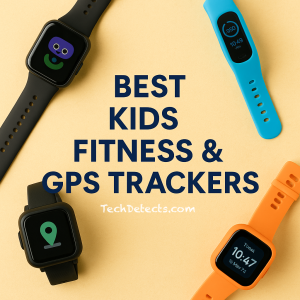
We shortlisted the best fitness and GPS trackers for kids based on what actually matters to parents and what actually works for children:
- location features that make practical sense
- safe communication tools
- activity tracking that kids will actually use
- comfort and durability for daily wear
- platform and subscription realities most buying guides skip
This list is built for a global audience, so we are also paying attention to something many articles ignore: some of these devices are excellent, but they work best only in certain regions, on certain carriers, or with a recurring plan.
Quick Picks
- Best overall for most families: Fitbit Ace LTE
- Best GPS watch for younger kids: COSMO JrTrack 5
- Best for calling and video chat: TickTalk 5
- Best for Apple families and older kids: Apple Watch SE (GPS + Cellular, Family Setup)
- Best simple carrier-backed option: Verizon Gizmo Watch 3
- Best non-cellular fitness tracker: Garmin vívofit jr. 3
- Best premium GPS + fitness hybrid alternative: Garmin Bounce 2
What matters most before you buy
GPS tracker vs fitness tracker: these are not the same thing
This is the first thing to get right.
A GPS kids smartwatch is mainly about communication and location:
- live location or location checks
- calling and messaging
- safe contacts
- school mode
- SOS tools
A fitness tracker for kids is mainly about movement and habits:
- steps
- activity goals
- streaks or rewards
- long battery life
- lighter, simpler design
Some products try to do both. A few do it well. Many are much better on one side than the other.
Monthly subscription matters more than people expect
A lot of the best GPS watches for kids need a paid plan.
That is not necessarily bad — it is usually how calling, messaging, and real-time location work — but it changes the real cost of ownership. A device that looks affordable upfront can become much more expensive after a year.
If you do not want recurring costs, a true fitness band like Garmin vívofit jr. 3 makes much more sense than a cellular watch.
Age fit is a real buying factor
Some watches are better for a 6-year-old. Some are better for a 10-year-old. Some are really closer to a “first wearable phone” for tweens.
Things that affect age fit:
- size and weight
- complexity of menus
- touchscreen ease
- whether the child actually wants to wear it
- whether parents want communication or just basic tracking
Battery life can change how useful the tracker feels
A kid’s tracker that is constantly dead stops being a safety tool and starts becoming a frustration.
As a rule:
- cellular GPS watches often need frequent charging
- simple fitness trackers usually last much longer
That does not make one category better — it just means you should buy with realistic expectations.
Durability matters more than style for younger kids
A stylish watch is nice. A watch that survives playground life is better.
For younger kids especially, pay attention to:
- water resistance
- case size
- screen protection
- strap comfort
- whether it feels too large for smaller wrists
Best Fitness & GPS Trackers for Kids (2026)
Fitbit Ace LTE — Best Overall for Most Families
Why it’s here: This is one of the smartest blends of movement-focused design and modern kid-safe connectivity.
Who it’s for: Families who want both activity motivation and peace-of-mind communication in one device.
What it nails
- combines activity tracking with a true kids smartwatch approach
- calling, messaging, and location tools make it more than just a fitness band
- movement-based games make it more engaging than many traditional trackers
- School Time features help reduce distraction during class hours
Real-world experience
This is one of the few kids wearables that feels designed around how children actually behave. It does not just count steps and sit there. It tries to make movement part of the experience, which is exactly why it stands out from simple trackers.
It also makes more sense than handing a child a smartphone too early. For many families, this is the sweet spot between “basic band” and “too much device.”
Trade-offs: It depends on the Ace Pass subscription, and like many connected watches, charging is more frequent than with simple fitness bands.
COSMO JrTrack 5 — Best GPS Watch for Younger Kids
Why it’s here: COSMO continues to be one of the more parent-focused names in this category, and JrTrack 5 is built very clearly around safety-first everyday use.
Who it’s for: Parents of younger children who want calling, messaging, GPS tools, and stronger guardrails than a general smartwatch provides.
What it nails
- GPS tracking, messaging, and calling in a child-first design
- SafeZone-style features and parent-managed controls are strong selling points
- built with the “first independence device” mindset, not a mini adult smartwatch
- activity tracking is present without overcomplicating the experience
Real-world experience
This feels like a watch built by people who understand that most parents are not shopping for a fun gadget first — they are shopping for a controlled communication tool. That makes it especially appealing for elementary-age kids.
The feature balance is strong: enough to feel useful, but not so much that it starts becoming a distraction machine.
Trade-offs: Ongoing service costs still matter, and exact app support or regional usefulness depends on where you live.
TickTalk 5 — Best for Calling and Video Chat
Why it’s here: TickTalk has long been one of the biggest names in kids smartwatches, and its communication tools remain a major reason people buy it.
Who it’s for: Families who care most about staying in touch by voice, video, and messaging.
What it nails
- strong communication focus with voice and video calling
- real-time GPS tracking is part of the package
- school mode makes it more realistic for daily use
- parent-approved contact model is much safer than giving a child an unrestricted device
Real-world experience
If your main goal is, “I want a safer way to reach my child without giving them a real phone,” TickTalk is still one of the most logical picks. It is less fitness-first than Fitbit Ace LTE, but stronger as a communication watch.
That makes it particularly appealing for families who want regular contact throughout the day.
Trade-offs: It is more watch-phone than true fitness tracker, so parents mainly interested in health and movement may prefer another option.
Apple Watch SE (GPS + Cellular) — Best for Apple Families and Older Kids
Why it’s here: For the right family, this is one of the most capable kids wearables available — but it is not the best fit for everyone.
Who it’s for: Apple households with older children who are ready for a more advanced watch experience.
What it nails
- strong ecosystem integration for Apple families
- Family Setup makes it possible to manage a child’s watch without giving them an iPhone
- location, calling, messaging, and activity tracking are all strong
- looks and feels more premium than most dedicated kids watches
Real-world experience
For older kids, especially tweens, the Apple Watch SE can feel like a much more natural long-term device than many child-themed watches. It has the polish, speed, and app maturity that many parents already trust.
But this is not really the best “little kid watch.” It makes more sense once a child is mature enough to handle a more advanced interface and when the family already lives comfortably in Apple’s ecosystem.
Trade-offs: Cost is higher, GPS + Cellular matters for real independence, and it is overkill for many younger children.
Verizon Gizmo Watch 3 — Best Simple Carrier-Backed Option
Why it’s here: Gizmo remains one of the easiest entry points for parents who want a familiar carrier-supported kid watch.
Who it’s for: Families who want a straightforward mainstream option with calling, location tools, and easy setup.
What it nails
- simple parent-managed experience through Verizon’s ecosystem
- location tracking, approved contacts, and geofencing-style tools make practical sense
- easier to understand than many feature-heavy alternatives
- a strong fit for younger kids who do not need a lot of extras
Real-world experience
This is the kind of product that appeals to parents who do not want to over-research niche brands. It feels more “mainstream service product” than “specialized parenting gadget,” and for many families that simplicity is exactly the point.
It may not be the most exciting choice, but it is one of the more approachable ones.
Trade-offs: Best suited to Verizon users and not as globally flexible as some other picks.
Garmin vívofit jr. 3 — Best Non-Cellular Fitness Tracker for Kids
Why it’s here: Not every family wants calling, GPS subscriptions, and smartwatch complexity. Sometimes the better choice is a true kid fitness tracker.
Who it’s for: Parents who mainly want movement tracking, rewards, habits, and extremely low-maintenance daily use.
What it nails
- excellent battery life compared with connected kid watches
- lighter and simpler than most GPS smartwatches
- durable and swim-friendly design is great for actual kid life
- a much cleaner fit for habit-building than phone-alternative watches
Real-world experience
This is one of the easiest recommendations for families who hear “kids tracker” and really mean “something that gets my child moving.” It avoids the major headache of constant charging and monthly plans, and it feels much more like a healthy-habits product than a communication device.
That simplicity is its biggest strength.
Trade-offs: This is not the right pick if real-time calling and GPS features are your priority.
Garmin Bounce 2 — Best Premium GPS + Fitness Hybrid Alternative
Why it’s here: Garmin has a stronger fitness heritage than many kids-watch brands, and Bounce 2 is one of the more interesting “active kid plus connected safety” options in this space.
Who it’s for: Families who want a more fitness-aware GPS smartwatch and do not mind paying more for a premium alternative.
What it nails
- combines Garmin-style activity focus with calling, messaging, and location features
- more sport-minded than many kids GPS watches
- strong brand trust for parents who already like Garmin devices
- good fit for active kids who will genuinely use the fitness side
Real-world experience
This is one of the better choices for parents who feel that many kids GPS watches are too toy-like. Bounce 2 has a more serious wearables feel while still staying clearly child-focused.
It is especially appealing if your child is active and you want something beyond the usual “call and locate” formula.
Trade-offs: Higher price and subscription cost make it less of an easy mainstream recommendation.
Recommended Reading: Best Drawing Tablets for Kids to Buy
How to choose the right one for your child
Choose Fitbit Ace LTE if you want the best overall balance
It is one of the rare devices that genuinely blends movement, motivation, and parent-friendly connectivity in a way that feels modern.
Choose COSMO JrTrack 5 if safety-first simplicity matters most
This is the better fit for families who want a child-first GPS watch without jumping straight into a more general smartwatch ecosystem.
Choose TickTalk 5 if communication is your top priority
If voice, video, and direct contact matter more than step goals and fitness gamification, TickTalk is the stronger match.
Choose Apple Watch SE if your child is older and your family already uses Apple
It is the most polished option here, but it is also one of the easiest to overbuy for a younger child.
Choose Garmin vívofit jr. 3 if you do not want a monthly plan
This is the cleanest answer for parents who want activity tracking, durability, and less ongoing hassle.
Buying mistakes to avoid
Do not confuse “fitness tracker” with “GPS smartwatch”
A lot of disappointment comes from buying the wrong category, not the wrong product.
Do not ignore subscriptions
The real price of a cellular kids watch is the device plus the plan.
Do not buy a large watch for a small child just because the features look impressive
If it feels bulky, awkward, or annoying, the child may stop wearing it.
Do not overbuy complexity for a younger kid
A first tracker should usually feel simple and safe, not like a mini phone with too much going on.
Conclusion
The best fitness and GPS tracker for kids depends heavily on what you are actually trying to solve.
If you want the best all-rounder, the Fitbit Ace LTE is the strongest overall pick because it brings together activity, connection, and kid-friendly design better than most rivals.
If your priority is a younger child’s safety-focused GPS watch, the COSMO JrTrack 5 makes a lot of sense.
If communication matters most, TickTalk 5 remains one of the strongest names in the category.
If you want a no-subscription fitness-first option, Garmin vívofit jr. 3 is still one of the smartest and simplest buys.
And for older kids in Apple households, the Apple Watch SE is the most polished long-term option — provided you actually need that much watch.
The key is simple: buy based on your child’s age, your platform, and whether you want safety communication, fitness motivation, or both.